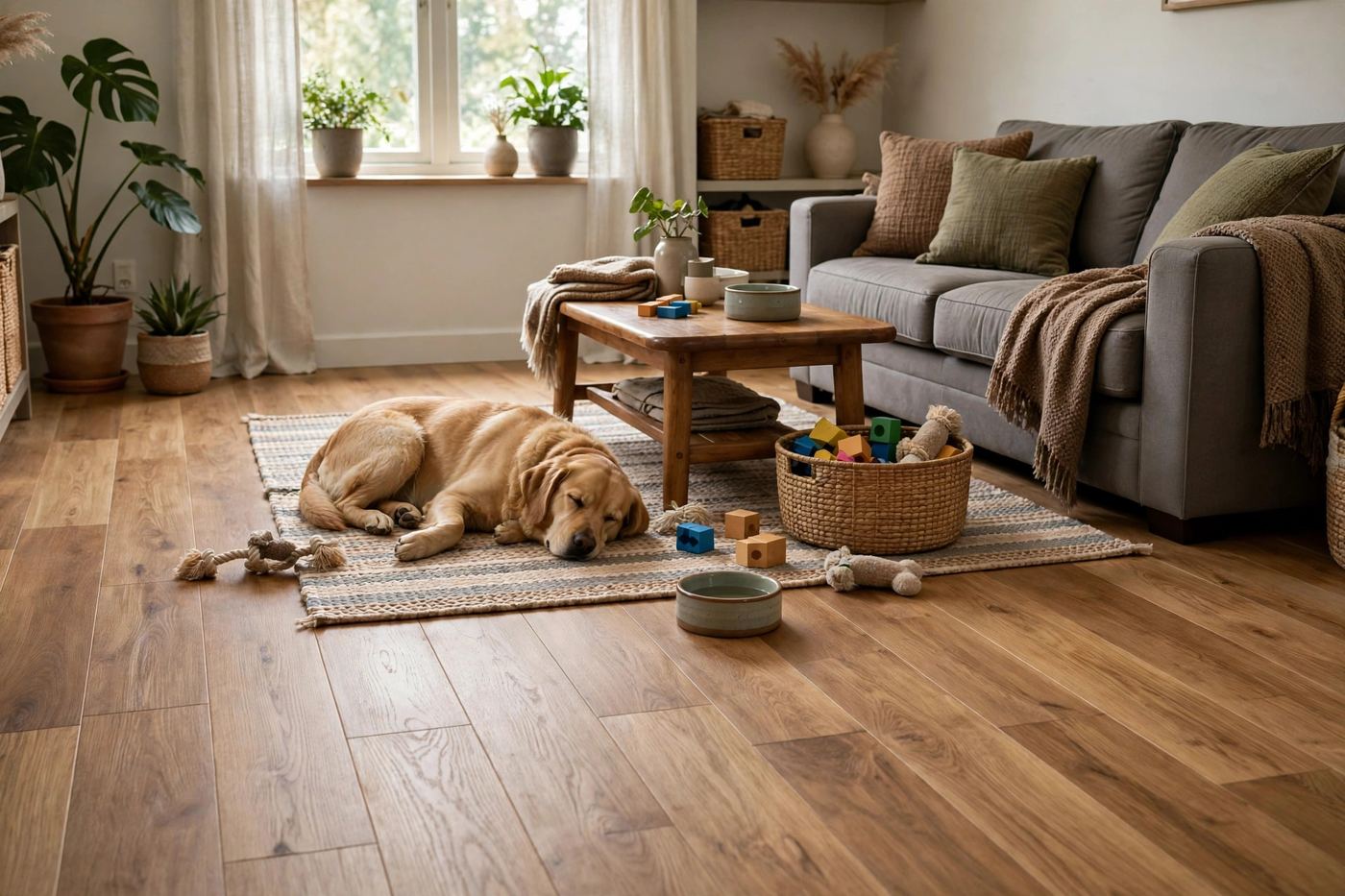
When refinishing wins
Solid hardwood with enough wear layer left, localised stains and damage, and a layout you are keeping. When boards are cupped from long-term moisture, patched with mismatched species, or sanded to the tongue, new flooring is the honest answer — we will show you which yours is.
The process
- Furniture out, floors protected elsewhere, dust containment set
- Sanding through grits, edging to the walls, stain sample on your floor (not a store chip)
- Water-based or oil-based finish coats with realistic cure times before furniture and rugs return
Finish choices that change how the floor lives
The finish matters as much as the sanding. Water-based finishes dry clear, keep oak looking lighter and carry far less odour while they cure, which suits families staying in the house during the work. Oil-based finishes amber as they age and deepen the warm tone most 1970s red-oak floors were built with, but they need longer before rooms return to normal use. Sheen is a practical choice too: matte and satin hide everyday scratches, pet traffic and Georgia grit far better than gloss.
Stain is where older Cobb floors surprise people. Red oak and white oak take the same stain very differently, and sun-faded boards will not match a shaded hallway until they are sanded back to fresh wood — which is why samples go on your floor, in your light, before a colour is locked in. Afterwards, steady indoor humidity matters: wide seasonal swings are what open gaps and lift edges on a floor that left the sanders flat.